Skip to content
Pinter Computing

Knowledge Base for IT Professionals, Teachers, and Astronauts

Pinter Computing

Knowledge Base for IT Professionals, Teachers, and Astronauts

  • Home
  • Programming
  • DevOps
  • Project Management
  • Software and Hardware
  • Miscellaneous
  • Egyebek
  • About
  • Experience
  • Education
  • Contact
  • Home
  • Programming
  • DevOps
  • Project Management
  • Software and Hardware
  • Miscellaneous
  • Egyebek
  • About
  • Experience
  • Education
  • Contact
Close

Search

Home/Software Development/Development tools/Microsoft Visual Studio/Display deleted items in the Microsoft Visual Studio Source Control Explorer
Microsoft Visual StudioTFS

Display deleted items in the Microsoft Visual Studio Source Control Explorer

By Laszlo Pinter
May 22, 2013 1 Min Read
0

When you delete a file or folder in TFS by default it is no longer displayed in the Source Control Explorer. To be able to “undelete” a file or folder enable the visibility of deleted items in Microsoft Visual Studio.

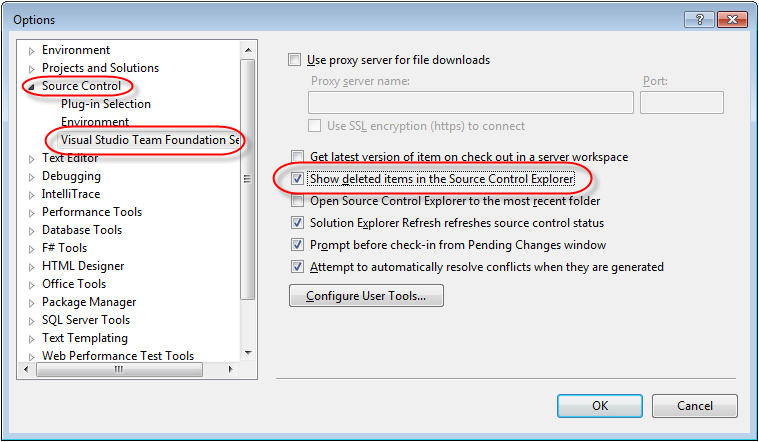
To see deleted items in the Source Control Explorer

  • Start Visual Studio
  • In the Tools menu select Options
  • On the left side expand Source Control
  • On the left side select Visual Studio Team Foundation Server
  • On the right side check Show deleted items in the Source Control Explorer
  • Click OK to save your changes

visual studio tfs show deleted items in source control explorer

To “undelete” a file or folder

  • Start Microsoft Visual Studio
  • Open the Source Control Explorer window
    • In the View menu select Other Windows
    • In the list select Source Control Explorer

In the Source Control Explorer window navigate to the location of the deleted item. Deleted files and folders are displayed in gray with a special icons.
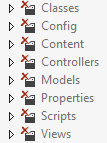
visual studio tfs deleted folders in source control explorer

  •  Right click the item and select Undelete


Tags:

TFSVisualStudio
Author

Laszlo Pinter

Follow Me
Other Articles
Previous

Insert multiple rows into a Microsoft SQL Server database

Next

How to configure the domain password expiration policy in the Microsoft Active Directory

No Comment! Be the first one.

Leave a Reply Cancel reply

Your email address will not be published. Required fields are marked *

Search

Last Changes

  • DevOps Engineering part 1. (Mac) - Make your Macintosh easier to use June 25, 2026
  • Japan travel tips June 22, 2026
  • How to stop the rain and snow in Cities: Skylines II June 20, 2026
  • Cities: Skylines II Developer Mode June 20, 2026
  • 'CSII_MANAGEDPATH' has incorrect path(s) when building Cities: Skylines II mod June 20, 2026

Tags

.NET .NETcore 3Dprinting ASP.NET Core AutodeskInventor AWS C# Chef cloud DevOps Docker EntityFramework Games Git Go iOS iPad iPhone iPod Java Kubernetes Linux MacOSX MSSQL MVC Node.js Packer PowerShell Python RDS RightScale Ruby security Splunk TeamCity Terraform TestKitchen Tomcat Ubuntu Vagrant VirtualBox VisualStudio Windows WordPress Xcode

Recent Comments

  • Zengei László on MyHeritage családfa exportálása és küldése emailben
  • Raúl Castillo on DynDns update error
  • MICHAEL on Windows Media Player 12 cannot find the album information
  • Nargis on Configure Epson ET-3850 scanning on Windows 11
  • Venczelné Zemen Erika on Delta S2302 termosztát programozása

–

  • Log in
  • Entries feed
  • Comments feed
  • WordPress.org
Copyright 2026 — Pinter Computing. All rights reserved.